Saturday, August 30, 2014

How To Become An Expert At Article Marketing

Article marketing is one of the best marketing strategies that any business can use. It however must be well done if it is to bring the expected results it has been designed for. You can become an expert at article marketing without having to work too hard. By following a few writing guidelines, you can become an expert in this kind of marketing overnight. Here are tips that you can easily use to be the expert that you wish to be in article marketing.
Make articles useful
This is one tip that can determine how successful you are with article marketing. Articles which are packed with useful information will always bring positive results for you. The only way you will gain the confidence of potential customers is when you have useful information for every article that you write. Useful articles will also easily boost your ranking on search engines. Always use unique but useful content on your website and you will pass for an expert.
Structure the articles well
The structure of the articles that you write can determine how good they appear to your readers and how professional you appear to be in their eyes. You should make sure that all your sentences and paragraphs are short and clearly to the point. A block of text can be boring and won't hold the attention of your readers to the end. Shorter sentences and paragraphs will not only keep your articles interesting, but will also make it easy for readers to understand what you are talking about.
Use humor wisely
Humorous articles are always worth a read and you can use humor for your article marketing success. You however must make sure that you tell the right jokes within the article without blowing it out of context. When you know what is most appropriate, you will come up with excellent articles that will favor the article marketing goals you have in place.
Pick interesting articles
Apart from choosing content that will be appealing to your readers, it is also definitely important to choose topics that you find interesting. When you write about something you are interested in, you will be more emotional and your readers will feel this too in your writing. Articles you are interested in will always gain value with your readers compared to those you are not interested in at all.
Ask and value feedback
Asking for feedback from your readers is important. This is because from the feedback you will find very helpful ideas to improve on your article marketing skills. You will find out easily what appeals to your readers and make any improvements needed. Readers also love to feel valued and when you ask for feedback, they feel that you really are involving them which should be good for you and your business. Always value feedback that you get whether positive or negative as it can bring out the expert in you.
There is so much to article marketing and it is a powerful tool that any business can use. To find out more on this topic and other business strategy insights, please click on the link below.
Paul Coleman is helping others gain knowledge about how to make money through online business, internet marketing and investing. Find out how I am creating financial freedom all across the world and how you can get in on the action FREE => Click Here!


Article Source: http://EzineArticles.com/8684037

Where Can You Get Free New Books?

New books can be expensive, particularly depending on the subjects they tackle. But, a reading enthusiast will still buy books whenever they can to enjoy a good read. In modern living, it is possible to read books from tablets or even laptops. This does not however compare with having a tangible book that you can refer to as many times as possible in the future. It is made even simpler to get a handy book since it is now possible to download the books. There are actually sites that will give you access to download free new books that you love the most. Here are some of the top websites that you can use to get a hold of your favorite reads.
http://adf.ly/rcHja:
This website offers Nook textbook downloads. These books resemble real paperback ones in their look, pictures and sizes. They are arranged in categories for your convenience and you can browse them to find your favorite books for download. Even when you choose a book that is chargeable from their site, you will enjoy a free sample first after which you can decide to go ahead with the download or not. The textbooks are in different languages and genres. There are however not many free books on the website.
http://adf.ly/rcHkF:
This is another great website for downloading books with just a simple click. Majority of the books on this site are about improving skills and studying and the advantage is that you can download all books in a certain category through a simple click. You might however need to sign up for newsletters to manage downloading the books. Those looking for excellent college books will find the site quite helpful.
http://adf.ly/rcHqR:
It has large book volumes that are grouped in recommendations, genres and popularity to make it easier for you to find the most appropriate books for your use. By looking at the reviews that are given by other readers, you are able to book one. You are also at liberty to leave your review for debatable narratives. Every book on the website comes with complete data, hence it is very easy to make a decision amongst the many choices that you have.
On http://adf.ly/rcHs0:
The interface is the most striking feature of this website. It is designed to offer a pleasant experience with the search for the perfect books. It also offers detailed information on every literature piece that it has to offer. Neophyte writers will find the website a great place to start with creating a book and getting it popular within a short period of time. You are required to register to get access or buy the books that you are interested in.
http://adf.ly/rcHun:
The ease of navigation offered by the website is perhaps what makes it stand out. The site map is very convenient for all users and it comes with a number of different options for book downloads. You will find anything from free kindle books, DVD and CD projects and audio books. It is the perfect site for devoted readers who do not care much about the details.
Newfreebooks.com is one stop destination for finding free ebooks & sharing pdf documents. The site has close to 7 million documents listed on the site for free.


Article Source: http://EzineArticles.com/8619951

Small Sacrifices by Ann Rule - Review


Small sacrifices is another Ann Rule masterpiece, that tells the story of small town, Oregon resident, Diane Downs and how it is that she got to the point of no return. Diane Downs took her three children to a rural, back road, pointed a pistol through the car window and she shot to kill.
After performing this cold blooded act, Diane then proceeded to drive her children to the hospital. The first female child to be carried into the hospital was dead upon arrival. Two other children were rushed through the doors one after another. The second and third child, a young boy and girl, barely clung to life. The hospital staff worked feverishly to stabilize the surviving children as their mother acted indifferent.
Upon being questioned by Lane County detectives, Diane Downs told the story of meeting a stranger on the back road, who stopped her car, initiated an argument with her and as she struggled with him, he proceeded to shoot her children, right before her eyes.
Over the following months Mrs. Downs changed the story of what happened and her suspicions so many times that she made herself the prime suspect.
As prosecutor Fred Hugi got more familiar with the case and met the surviving children he vowed to continue investigating the case until it was solved, once and for all.
No one is entirely sure why Diane Downs wanted to dispose of her children, It is suspected that the motivation may have resulted from her obsession with Lew Lewiston, who was a casual fling and fellow employee she met at the Chandler post office. Mr. Lewiston refused to leave his wife for Diane and did not want to raise another man's children.
Whatever her reasoning, the murder weapon was eventually traced to a man who had reported it stolen, potentially by Steve Downs, who is identified as the children's father, therefore giving Diane Downs access to it.
The surviving children, Christie and Danny eventually remembered what happened and with the evidence and their testimonies, their own mother, Diane Downs was convicted and sentenced to the Valley State prison for women located in Chowchilla, California where she continues to be a model prisoner and protests her innocence.
During the length of the case Detective Hugi found himself becoming closer and closer to the Downs children. Christie and Danny Downs are happy, well taken care of and currently reside with Detective Freg Hugi and his wife Joanne.
download E-book :http://adf.ly/rcHVj


Article Source: http://EzineArticles.com/8441929

How Body Armour Functions


You must have landed on this page in search for truth. Yes, body armour may be a common term but somewhere between the lines you really are not sure what it is, where to find them and how it functions. There may be more questions lingering in your mind but as you browse through the net, the information you have gathered may have even made your understanding more perplexing than it was before.
If this is your first time, it can be quite confusing since ballistic vest is varied. They come in different styles, types, kinds and levels of resistance capacity. In short, you still have a lot of learning to do. First, let us understand what it is.
Bullet proof vest is a protective clothing a person wears in order to repel ballistic impact. Once the bullet is released from the rifle and hits the vest, the bullet will then be caught between the fibers of the fabric, gradually minimizing its velocity until it reaches to a full stop before penetrating through the skin of the wearer. Although it is not a guarantee that the ballistic vest will prevent a person from experiencing blunt force trauma cause by the strong impact of the bullet, at least he is assured of evading gun wounds and other serious injury.
Next, you need to know that resistant vest comes in various designs. Some are made for tactical purposes and others are designed to be concealable which can be worn daily without getting noticed. This is recommended for businessmen, politicians, secret agents and the like. This can be worn underneath your daily wear. It's very thin and light and can be availed in black or white color. Military or tactical vest on the other hand are much bulkier and heavier and are more conspicuous when worn.
Apart from its size and weight, these ballistic vests are also capable of resisting variety of ammunitions. Lighter or lower levels of resistant vest can also repel lower types of handguns like 9mm while higher levels of resistance capacity can withstand the ballistic impact coming from AK-47.
Another thing is, the higher the level of resistance the more costly it can be as well. However, unlike before these vests can now be bought in a much affordable prices. Manufacturers have discovered lighter materials that costs lesser than the materials used before.
So when buying for one, make sure that you already know not only the functions of bullet proof vests but also why you need to wear one. It is vital to figure out where to use it, why you need to don resistant vest, which reliable supplier to procure your gear and the size among the many pertinent factors to be considered.
Lastly, bear in mind that wearing one is not a 100% guarantee. You also need to equip yourself with proper training on self-defense. Alertness is also important so as to evade danger and possible threat that is coming your way.
Henry N is an expert with Body Armour. He's focused in assisting our law enforcers and even regular people to gain more knowledge about body armor manufacturer. For assurance of getting NIJ licensed products, Bullet Proof Vest Shop is the spot to look into.


Article Source: http://EzineArticles.com/6995011

The Humanity of Justice, By: Burke E Strunsky


"The Humanity of Justice" is possibly the best book I've ever read on the modern American justice system. Relying on his own experiences as a Senior Deputy District Attorney in southern California, Burke E. Strunsky frames it this way: in a democracy, the justice system should not just be the objective interpretation of laws by professionals and systematic doling out of punishments based on precedents. The justice system is also an ongoing pursuit of what justice means. After reading Chapter 4, "The Jury: The Heart of American Justice," I had a renewed appreciation for the jury system as a quintessential component of a democracy. The jury is the "we" in "we the people." That is, the people have the responsibility and honor of deciding what justice is. Therefore, justice is a reflection of the moral will of the people. This book is about the people: the humanistic qualities and components of our justice system, but it is also a convincing argument that human emotions are a necessary supplement to logic and reason in deciding the psychological and sociological implications of crime, punishment and cultural analysis.
Strunsky doesn't mystify the reader with romanticizations of courtroom drama and complexities of the law one might find in a Hollywood crime drama or a law class respectively. It is a demystification, but an enlightening one. While this seems like an overzealous or glorifying review, the book deserves this encomium because it integrates justice and the role of humanity itself within the ongoing project of American society as the pursuit of justice. When you finish reading it, to be sure, you will come away with a better understanding of the American justice system and you will be implored to look at real and fictional criminal cases with more critical eyes. You might consider, or reconsider, the very idea of justice, not just as some drifting abstract signifier, extracted from case law and dispassionately applied to subsequent crimes, but rather what it really is in a democratic justice system: something "we the people" reconstruct with each particular case. Strunsky provides ethical and practical comments in discussing some of his past cases (often brutal and horrific crimes he has prosecuted). This commentary never seems partisan and is always an elucidation. In other words, he does not dazzle you with incomprehensible court jargon; he explains it. For example, rather than using tactics to "trick" the jury into seeing a case his way, he explains (often misunderstood) jargon such as "abiding conviction" and "reasonable doubt" so the jury knows exactly what the court is talking about. He wants the jury (and all citizens) to recognize their individual roles in a social dynamic, to think like humans (thus, the title).
Among these broad contexts of justice and humanity, are the cases themselves. Some issues in the examples discussed are: flaws in capital punishments, the hypocrisy of clergy-penitent privilege, and the effective use of narrative in arguing the case. Strunsky presents the argument that we can improve upon these and other issues with a common sense (humanistic) approach to the pursuit of justice. Strunsky also devotes considerable time to crime prevention: socially in terms of gun control (a common sense look at this controversial topic) but also the economic, individual, and psychological precursors of crime: from prenatal care to adulthood. Strunsky brings what I think is a necessarily subjective, human spirit to supplement what is often thought of as an objective, law-written-in-stone institution.
Reviewed by: Nicole Sorkin, Pacific Book Review


Article Source: http://EzineArticles.com/7224926

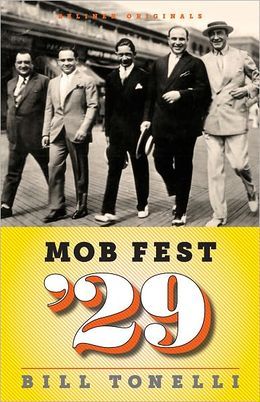
Book Review - Mob Fest '29: The True Story About the Birth of Organized Crime


Mob Fest '29: The True Story About the Birth of Organized Crime was written by veteran mob writer Bill Tonelli, and while I don't think this is a great book, it's certainly an excellent book that deserves your attention. Tonelli has written about organized crime for the New York Times, Slate and Philadelphia Magazine, as well as several full-length books on the subject, certainly an impressive resume and not one of whom is wet behind the ears as far as the mob is concerned.
I would have given this book 4 ½ stars if that were possible, but since it's not on Amazon's options list, I gave it the full five stars.
It's exasperating and I really don't understand the caustic one-star reviews that are splashed across the review page of this book. Saying Mob Fest '29 is poorly written may be an opinion, but it also may be a vendetta. Look up the term sock puppeteers and you'll get an understanding of what I'm talking about. In my opinion, and I've been a published writer for almost 40 years, this is a well-written book; maybe a little rude in spots, but certainly well enough written that Tonelli keeps the reader reading, and that's the result any good writer strives for anyway.
In these one-star reviews, readers complain Tonelli is quoting other books to make a point. Well, that's exactly what writers do. They research books related to the subject they are writing about and they attribute the quotes, instead of writing them like they were their own original words.
Tonelli, a true pro, did extensive research for this book, going as far as to interview top-notch crime writers like Jimmy Breslin and Mike Dash. Concerning the legendary (imaginary?) huge Atlantic City mob summit in 1929, Tonelli digests the facts as he sees them. Then he comes to a conclusion, which I won't divulge for obvious reasons. I happen to not totally agree with Tonelli's conclusion, but I understand his reasoning and he may be right about certain events or non-events, which, according to mob lore, have always been presented as gospel when they may have been total bunk.
For instance, there is a question as to the validity of the famous photo of Chicago mobster Al Capone bouncing on the Atlantic City boardwalk with Atlantic City mob boss Enoch "Nucky" Johnson and three other mob dignitaries (This picture is on the cover Mob Fest '29). Capone is on the far left and Johnson is on the far right.
Was the picture a phony posted in the Heart-owned New York Evening Journal to discredit Johnson? According to Johnson - it was.
Tonelli noted in Mob Fest '29, which was originally posted in Chance of a Lifetime by Grace D'Amato, "I never walked with Capone. I told people that the New York Evening Journal's photographer superimposed two photographs. If you noticed, I had a summer suit on, while Capone and his cronies had on winter clothes."
The supposed reason why Hearst would do such a dirty deed to Johnson was that Johnson was fooling around with Hearst's girlfriend and Hearst hit Johnson where it hurt him most: in his reputation.
Like Tonelli says in Mob Fest '29, "Hearst was the press baron who instigated the Spanish-American War to boost readership. After that, faking a photograph didn't seem much of an ethical stretch."
Despite the troubling one-star reviews, mob aficionados should enjoy Mob Fest '29.
I know I did.
You can see my blog: Joe Bruno on the Mob at: http://www.joebrunoonthemob.wordpress.com


Article Source: http://EzineArticles.com/7397924

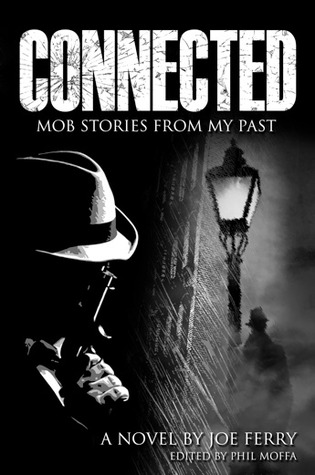
Connected: Mob Stories From My Past - Review


This is not a sentimental world. Crime occurs on a daily--or rather, a second to second--basis. Some of these crimes are committed by individuals with no conscience or ability to comprehend (or care) about the consequences of their actions. Others, however (and some of the most horrific), are carried out by loving fathers, family men, church members, and little league coaches. In Dr. Joe Ferry's novel entitled Connected: Mob Stories From My Past we are shown a bizarre, and at the same time a surprisingly comical, subculture of American society: it is the world of 'the mafia,' a secret network of bosses, hit men, and godfathers with one foot in the old world and one hand in - well, nearly every aspect of American life.
The narrator begins his story by telling us a little about his hero: his hard-working father who taught him how to be a man in the world. Then juxtaposed against a few reflective thoughts regarding his early family life, we are told that his father was a mob Don who killed anyone who crossed him. For a normal boy the apparent contradiction between a life of crime and a comfortable middle class existence would perhaps be enough to baffle the mind; or stunt a young man's moral and spiritual growth. Fortunately our narrator was never 'a normal boy' - but a highly intelligent individual with the capacity to integrate his experiences as a mob Don's son into his life as a student, an athlete, a musician, a record producer, a college professor, and a loving husband.
In Ferry's portrait of an artist as a young mobster, we are given insights into the interworking of an organization "connected" to the larger New York mafia. Yet more significantly, we are taken on a journey into the psychologically complex personality of the narrator himself. Our ability to come to terms with the underground world in which he grew up rests upon understanding the internal dialogue--and the demons--that constitute our narrator's consciousness.
"My mom always said that I was Trouble, almost from birth. The nickname took. So that's what you can call me. For as long as I can remember, the two things I enjoyed doing most were walking and stealing." This simple statement whereby our narrator introduces himself to the reader goes a long way in summarizing his personality. On one hand, Trouble was a product of his environment; the son of one of New York's most ruthless mobsters (and a man with a mean streak). Yet at the same time, from an early age Trouble exhibited a sensitive, contemplative side. And as a young "mobster in training," learning the ins and outs of mob-life from the best in the business, he also developed an interest in--and a real talent for--music. So when one saw Trouble Ventura walking the streets of New York City, it was difficult to tell whether he was taking a walk to 'clear his mind,' or heading towards his next 'music gig,' or on his way to 'shake a guy down.'
One day Trouble's father gave his son this wise advice: "We are suited to our callings, boy. Make no excuses for yourself. We are complex creatures. We are shadows of light. Good and bad." With these words the seeming contradiction between "the world of organized crime" and a life committed to art, family, and community is laid to rest. For as the narrator's father rightly remarks, this world--and human nature--is far too complex and variegated to reduce (experiences or people) into simplistic categories: such as 'good' and 'evil.'
Ostensibly a novel chronicling Trouble's formative years as a young mobster, the narrative is peppered with pearls of wisdom and comical anecdotes drawn from daily life. For example, in a chapter entitled "Girls Who Puked On Me" the narrator confesses that a surprising number of his most romantic relationships--and moments--have been ruined by spontaneous bouts of vomiting: as otherwise lovely women hurled their 'lunch' all over him (and his hopes of 'getting lucky'). In another chapter we encounter an eccentric elderly lady named Minnie Chestnut; who presents the author with authentic photographs and historic artifacts proving that she met Abraham Lincoln, dined with President John F. Kennedy, and spent intimate moments with Amelia Earhart and the great jazz legend Charlie Parker. Then in another chapter we are introduced to a history professor who possesses--'believe it or not'--the first LP in the history of the human race: a vintage clay pot (which has embedded in its decorative grooves a recording) from the eighteenth century; upon which our narrator and several music professors hear the voice and piano playing of one Wolfgang Amadeus Mozart.
The brilliance and beauty of these vignettes brings to light the real strength of the novel: since the stories Ferry tells are at times so outlandish, and yet written with the accuracy (or attention to detail) of a skilled biographer, the reader simply doesn't know what part of the novel is fantasy, and which part is historical fact. Aside from learning a great deal about his father's business, his time spent associating with colorful storytellers--i.e., mobsters--also taught our author how to spin a 'good yarn.' From the prologue to the final chapter, Connected: Mob Stories From My Past entertains and educates; simultaneously evoking horror and laughter in the reader. I highly recommend this book to anyone who appreciates (and perhaps can stomach) the slapstick memoirs of an accomplished musician and mobster.


Article Source: http://EzineArticles.com/7407219

New Father and Son Cop Book Reveals the Hearts Beneath the Uniforms

At a time when television and movies are full of police stories, a father and son have come forth to present a real-life personal look into the lives of police officers. Far more than any episode of Cops can do in thirty minutes, Jim and Jay Padar's new book On Being a Cop brings us into the heart of a police family, showing not only the job that these brave men (and women) daily perform on the streets of Chicago, but also the relationships that police officers have with their families and their coworkers.
We expect action, drama, grisly murders, and high-speed chases from a cop book, but we might not expect the tales of officers struggling with their personal lives, the hardships that the job brings to their families, the interrupted Christmases and missed birthday parties, the need not to think about your own children while investigating the murder of a child, or what it is like to lose a fellow officer in the line of duty or to suicide. Walking a fine line between the sensational and the sentimental, On Being a Cop provides a balanced look at all aspects of a cop's career and life.
Author Jim Padar had a long career as a police officer beginning in the 1960s. He writes about such incidents as the riots in Chicago following Martin Luther King's assassination as well numerous homicide investigations he was involved with and his relationships with his partners and coworkers. His son Jay shares his own stories of both humorous and dangerous incidents, including emails to family and friends and their responses. In fact, the book began as a series of emails exchanged between father and son in which they started telling their stories of working Chicago's streets, and in time those stories were compiled into this book.
A wide range of stories fill this book, from a shooting at a commuter train to corpses found in barrels in a restaurant, and from rescuing people and parakeets from burning buildings to investigations that lead from Chicago to New York and Puerto Rico. In fact, there is so much variety among these stories that the interest and pace never lags. As Jay writes at the beginning of his story, "7 a.m.?": "Senators, Naked Gays, Schizophrenic Homeless, and a Polish Sausage. How do you tie that together in a short story? It's easy... for a cop." And with the exception of a couple of two-part longer stories, most of the stories are short and can be read individually and in any order.
It is hard for me to decide whether I have a favorite story in this book. It might be the story of Uncle Rocco, a small-time criminal who turns out to be the authors' relative, or perhaps it's the story of how Jim found his second wife with a little help from Jay, when he was only four years old. I loved the police humor, the jokes between officers to keep the stress and horror of their jobs at a distance, and I loved when I was so caught up in the story that I had to keep reading to see how an investigation would turn out and who would be revealed to be the true criminal. But perhaps most of all, I loved when a member of the public took the time to tell an officer to be careful or simply to say, "Thank you."
While there is plenty of sadness over the tragedies that these men have witnessed, there is also a lot of humor, and a great deal of their hearts and souls is revealed as they talk about their feelings for their families, their fellow officers, and why they continue to do a job for which they often get little thanks or appreciation. On Being a Cop makes you realize that police officers are human beings; that they have chosen a dangerous but rewarding job, and that they deserve respect, understanding, and most of all, admiration for the jobs they do every day.


Article Source: http://EzineArticles.com/8159127

Inspiring Science and Engineering: The Large Hadron Collider (LHC)


The Large Hadron Collider (LHC) is the world's largest particle accelerator.
It lies up to 175 metres deep in parts below the Franco-Swiss border near Geneva in Switzerland and it's tunnel has a circumference of 27 kilometres.
This huge piece of engineering was collaborated on by over 10,000 scientists and engineers from over 100 countries.
It was build with the aim of exploring many physics theories in the area of physics.
The Higgs Bozon is known by many as the God Particle and is said to contain enough energy to propel us into a new age. The discovery of such a particle could in fact create a new pathway in relation to how we power our day to day luxuries, such as our homes, cars, motorbikes, ovens, gadgets, swimming pools, 'if you're lucky enough to have one', I could go on here.
So how close are we to discovering this exiting particle? Well in fact after smashing electrons into themselves at very high speeds there have been moments where we came close, but at his moment not close enough.
What could happen if anything went wrong, well there is a slim chance a black hole will appear, it's nice to know people asked my opinion before building this...
But what does it actually do?
The Large Hadron Collider is a particle accelerator - a device that uses electromagnetic fields to propel charged particles to high speeds and to contain them in well defined beams.
The charged particles are accelerated and energised to very high speeds and then made to collide with other particles. The purpose of this collision is to allow scientists to view the byproducts created from the collision, these byproducts give us great insight into the sub-atomic world and the laws and behaviours of these sub-atomic particles.
The LHC is expected to answer many of the most fundamental questions in physics and give us greater insight into the workings of nature.
These questions cover such things as the interrelation between quantum mechanics and general relativity, the deep structure of space and time and the nature of dark matter. This amazing piece of science and engineering has already had a huge impact upon the science world with breakthroughs such as locating the Higgs Bozon, who knows what else will be discovered in this ground breaking area of science.
The Higgs Bozon is known as the god particle as it's said to contain the energy used at the start of the big bang, by finding this particle it will help scientists to create new forms of renewable clean energy as well as other possibilities such as space travel.
by Keith Griffiths
Hi, my name is Keith Griffiths. I am just a man expressing my opinions in a world of illusionary concepts, thoughts, emotions and ideas. Visit my website: www.keithgriffiths.co.uk


Article Source: http://EzineArticles.com/7573039

Book Review: Let There Be Light - The Story of Light From Atoms to Galaxies (2nd Edition)


This second edition of "Let there be Light: the Story of Light from Atoms to Galaxies" is, like the first edition, a delightful book. Light, or more generally electromagnetic radiation, is the vehicle that the authors use to traverse the broad subject of physics, and they do so in a humorous, gentle, yet serious manner. Although many of the topics have been revised - and the last chapter updated to cater for the emergence of the Higgs boson - the book has lost none of the appeal of the first edition. While the presentation is of a level suitable for third level students, there is much in the book that can whet the appetite of the bright senior school students engaged in their first serious study of the subject. Additionally, teachers of physics at second and third level will find insights and anecdotes aplenty to flavour the teaching process.
The book has a pleasant and light narrative flow, with excellent illustrations, photos, and occasional well-chosen "historical interludes". Topics are, nevertheless, treated with a good degree of rigour. In the second edition, most of the mathematical derivations, which appeared as appendices to the chapters of the first edition, have been replaced with verbal descriptions, and key mathematical statements are presented on "blackboards", all to make the book more accessible to the general reader. At risk of being considered decidedly old-fashioned, I admit to regretting the elimination of the mathematical appendices. Physics is well served by mathematics, and the serious student learns to appreciate the precision and clarity that mathematical analysis can bring to a topic.
The book attempts, with a good deal of success, to show an underlying connectivity between the seemingly disparate topics that confront the student embarking on a study of physics. It also places the topics in a historical context, emphasising the many human endeavours that have contributed to our remarkable modern understanding of the physical world. Affording due respect to the human endeavours that have led to great discoveries, without unnecessarily encumbering the student, is a delicate matter.
For example, we cannot expect a young student to follow Planck's torturous journey to his discovery of the quantisation of the energy of the atomic linear harmonic oscillator (as described so well in Malcolm Longair's recent book "Quantum Concepts in Physics"). With the benefit of hindsight, one can simplify the story to one much more amenable to the student, but one is in danger that a phrase such as "Planck's discovery of light quanta" (as quoted in the Preface) will find its way into the narrative. The story is correctly told in pages 18 and 19, and due acknowledgement is made to Einstein, who in 1905 extended Planck's idea of quantisation to light itself.
For the true physicist, there is a wondrous beauty in physics. This book is much in sympathy with this viewpoint, and it ends by quoting Abdus Salaam on the faith of all physicists: "the deeper we seek the more is our wonder excited". This may be the book that affords the struggling student a glimpse of the beauty that makes the serious study of physics so worthwhile.
More info on the book, Let There Be Light: The Story of Light from Atoms to Galaxies (2nd Edition) http://www.worldscientific.com/worldscibooks/10.1142/p795


Article Source: http://EzineArticles.com/8423048

Vera Britain's Crucible - World War One


wenty years old when World War One began, Vera Brittain was a well-to-do first-year student at Oxford and very much in love with young Roland Leighton, a friend of her brother Edward. In her work, Testament of Youth, first published in 1933, she ably recounts the many horrors of the conflict, how she joined up as a nurse-assistant to keep her from somber thoughts after the dearest men in her life had gallantly, if somewhat naively, marched off to war. With the help of her diary and a collection of letters, she articulately reconstructs with precision the sentiments that drove her onward through the next four turbulent years of hell.
Vera Brittain must have suffered tremendously. She lost both her love Roland and her only brother Edward. She also lost her Victorian innocence; she deftly paints the transformation from girlhood easily abashed by discussions of an adult nature to war-scarred nurse who sees the best parts of men amputated and thrown into bloody waste piles. She studied History at Oxford after the war and found work in journalism. Due to the intense emotional upheaval that she underwent, it took her fifteen years to detach herself enough from the experience to document it. After the war, she would evolve slowly into a writer of some import, a political speaker and a champion of feminism with a highly intellectual voice. She was eerily insightful about the future, and her struggle to be both a career woman and a mother was as intense as her fight to maintain her sanity in the slaughterhouses of war-torn France. She honestly retells incidents of post-war bouts with insanity, where she pulls frantically at an imaginary beard that appears every time she looks in the mirror, a sure sign of what we would now call post-traumatic stress disorder. The book is articulate and detailed, so much so that we're left amazed that she so accurately reconstructed such involved hypothetical internal dialogues so many years after the events. If not a post-event concoction, she must have been an extraordinary woman.
The narration, though it has an important message to convey, is written in a style meant to curry favor with her former black-mantled dons of Oxford English. Get your like-named dictionaries ready for a steady assault of inanity with the likes of propinquity, asseverate, fecundity, propitiation, and supererogation. These verbal gymnastics aren't helped by consulting the O.E.D. since the enforced expansion of diction leaves an after-taste that far outlasts the intended message. Her style is frequently cumbersome and pedantic, and through intellectual snobbishness, accomplishes the complete opposite of what was intended; it bores rather than inspires. Expensive erudition, like nudity, should only be exposed in tantalizing glimpses until the desire for more has been stoked by careful degrees to full flame.
In comparison to other important works of the day that deal with the personal costs of the war, such as Hemmingway's A Farewell to Arms, it doesn't have the same emotional impact. Although hers was a true account, his a work of fiction, Vera doesn't punch our lights out with her moving story mostly due to stylistic reasons. For example, a visual observer and reporter, she seems more concerned with the League of Nations delegates' descriptions of white fluffy eyebrows topped by Bromberg hats than the thoughts and deliberations that took place behind them. Of the former we receive much and the latter none. Be prepared for many descriptions of purple and pink flowers set against lurid multicolored sunsets. As a result, we never get the much needed helicopter view of the wider events in which her life unravels.
Distractingly, she parades her erudition and horticultural knowledge in the style of grotesque Edwardian epaulettes-and-bemedaled patriotism, making the reader painfully aware of her Oxford robes, copiously employing phrases of Latin, Greek, French, and German (all without translation!), ten-dollar words, sprinklings of 'deep' poetry quotations (many of them curiously her own), and assumes quite wrongly, that the reader is familiar with the terms of elitist English lives. It clouds and handicaps the emotional message which should give the writer cause to take up the pen and the reader the motivation to sift through the 650 page result. Unfortunate, because the work at times simply becomes a historical curiosity in which the background conveys more than the foreground. We become amused, not only by the fact that that a twenty-year old did not know the sexual functions of male and female bodies, but that it took her twelve pages of circumlocution to express it. In this regard, her writing is important only if to reflect the spirit of her times. Her Victorian morals were destructive to the individual in that they suppressed the expression of the beauty of human experience in which sex plays the leading role.
This is perhaps why Hemmingway succeeds with fiction while Vera only seconds with an arguably more compelling truth. To skirt around truth with time-obscured euphemisms is to dance naked in the privacy of the bath and call it an orgy. Although deep and introspective, there is no orgy of the senses in her work since it lacks a certain honesty needed to bridge the gap between souls. She is a product of her inhibited generation and my interest in the startling contrast of her Victorian upbringing when single women were never on dates without a chaperone, compared to our age which permits young ladies to send nude pictures to prospective partners via the phone, is about the only reason that kept me reading the work. I kept wanting to know when she would finally be enlightened to the full details of sex.
She devotes many pages to ribald or suggestive anecdotes. Subconsciously her desires surface for air despite the conscious Victorian need to drown them. She remains frustratingly true to her buttoned-down class and never reveals what we thirst for, reminiscent of the contemporary sea-side bathers covered from head to toe in reams of Victorian swaddling and laced boots. The fruits of her strident feminism, and of the world's for that matter, would only arrive in digestible bites.
We can thank the wholesale slaughter of men, intellectuals and others, for creating the void so abhorrent to nature into which her great intellect poured. Her work provides sufficient proof that women are as capable of producing the same level of progressive thought needed to propel and improve civilization, even in the face of the personal idiosyncrasies and foibles that face us all. Given the strength of the Victorian shackles her sex was burdened with, her accomplishments in advancing the cause of feminism are notable. She was one of the first carrying the banner, and like the millions of unprepared men asked to sacrifice themselves for no reward, she did the best we could expect of anyone in her times. It pains me to criticize such a historic milestone for the advancement of civilization, since it documents the ascendancy of feminism during and after WWI.
One can only be left to wonder, if her message had not been styled like so many fish-and-chips wrappers of Fleet Street whether she would have moved a larger audience than the few who trod the steps of the Bodleian and the ivied quadrangles of Oxford. It's an irony then that feminism originated from her class; the majority of men and women that she wished to affect would have been without the means to appreciate her work. Less exalted circumstances may have served her cause better. On the other hand, perhaps it was the men of her social strata greedily clutching the reins of power who most needed to be addressed in a manner they respected before changes could take place. If this is the case, then her work would have been invaluable in its day.
As I closed her book I was left with the feeling that it wasn't the millions of people who had to die and be maimed beyond usefulness so that society could give birth to a new paradigm and point the way toward a brighter future, but their outdated ideals. Vera Brittain's experience during the First World War unequivocally illustrates, despite the damage they cause, how desperately we cling to them.
Ed Schofield is a writer from Nova Scotia, Canada. His e-books can be found at Amazon.com.


Article Source: http://EzineArticles.com/8695476

Google+ businesse


Google+ (or G+) has been quite late to join the social media marketing party, so a lot of small business owners still view it with suspicion - should they or should they not engage with it? Is it worth spending extra time on social media marketing, by adding another tool to manage? According to Social Media Examiner's 2014 Report, while 54% of marketers are using Google+, 65% want to learn more about it and 61% plan on increasing Google+ activities in 2014.
But Google+ is not just another social media site, it works as a social glue that ties the internet together. Read on to find out if it's worth your while in marketing!
By February 2014, G+ has already 359 million active users, it occupies 65% of business/personal search results, it is linked to Gmail, which also has more than 4 Million users, it is also linked to YouTube, which has 800 Million visitors per month, and to Google mobile offering over 1 Million Android devices activated daily.
Google+ is integrated into all Google products and applications: Google Search, Gmail, Google Apps, YouTube, Android, Google Play Store, Google Translate, Google Drive, Analytics, AdWords, Maps, Places, Webmaster Tools, Google News, Images, and so much more. If you use Google tools for your business, in fact it's quite difficult to avoid creating a Google+ profile in the process for your user identity.
However as we all know, having a profile on social media and actually using it effectively for marketing - are two different things. And what's more, with Google+ you can not only have a personal profile, but a business page as well - a bit like Facebook.
So let's look at why and how you can use Google+ as part of your digital marketing strategy.
Google+ benefits for business marketing:
  • There is a growing G+ community - with more and more users getting on board. However at the moment it's not as busy or hard to promote as Facebook (especially with their new algorithm).
  • It has a clean and user-friendly interface, it's media (image and video) friendly, so your content can be made visual and stand out more.
  • Google Products/Service Integration - you can access everything with your single Google+ account.
  • With changing rules of SEO - profiles, posts and communities are indexed and searchable, so your activity on Google+ has a direct impact on your SEO results.
Google rates your posts based on the interactions they receive. These can come in 4 different ways:
  • +1 'ing a post (similar to a Facebook Like)
  • Commenting on a post
  • Re-sharing a post
  • Adding someone to circles (circles are similar to Twitter Lists, you can create as many as you like and organise your contacts in a way that will help you engage and interact more effectively).
More interaction = More trust = Higher Search Rankings for that interaction.
If you are new to Google+ and not sure how to get started at all, and what all different menu options mean.
Google+ Marketing Strategy
1. Improve your Local SEO results
Google+ Local pages are replacing the old Google Local business listings, so you will need to claim both old and new profiles for your business and merge them together. Add all necessary information that your customers will be interested in: how to contact you, address, opening hours, verify your website, add other social media, add images to showcase your products and services, write a description including your key search terms and keywords. Link from your website to your Local page and to your personal profile (as an author - see more below).
2. Link your Google+ profile to your blog
Confirm that you are the author of your blog in the eyes of Google and link the two together. This will get your photo and G+ link appear next to search results from your blog. If you have a WordPress blog you can easily link them up using one of the plugins (like SEO by Yoast) or through your theme settings. More technical information on how Google Authorship works can be found here.
3. Integrate Google+ into your website
Ensure you have your Local and Profile listings added to the site and that your site is verified with all Google services you will be using (including YouTube). Add your G+ profile badge or button to the website and show a +1 option for your posts and pages. This way other Google+ users can share your content with their followers for you. More interaction for your links = more SEO trust.
4. Use Hangouts on Air to connect and build your brand
With updated and enhanced Hangouts, you can connect with your customers, promote your products and services, run webinars and team meetings - all free of charge. And you can then share those videos automatically to YouTube increasing your reach even further. You can offer people your knowledge, insight, solutions or exclusive access to content and they will register for your hangouts, growing your Google+ circle and expanding your influence. A regular schedule of webcasts is a good platform for announcing product launches, discounts, promotional events, sales, etc.
5. Network effectively with the right followers using Circles
Circles are a great tool to organise your connections and followers in Google+. Circles help you segment your connections into interest or pipeline lists and thereafter share content only relevant to this particular Circle. You can also see what only those in a particular Circle are sharing, making it easier to comment and engage with their content back. You might find that you will engage with some of your Circles more often than others based on users in it. To find people worth connecting with you can use Google Search function and Ripples.
6. Share interesting and compelling content
As with any marketing channel, you would want to share content that's relevant, interesting and timely for your followers. Although you can't share posts directly on Google+, you can use a third party tool like Buffer or HootSuite to schedule your updates in advance. When posting updates you can tag other users, use hashtags (this is similar to Twitter again). Visual content is usually more appealing than text only, but test different options to figure out what really works for your audience. You can even post mini-blogs there, as unlike with Twitter or Facebook, there isn't a character limit for your posts.
7. Engage and interact with your audience
To grow your community and gain new business leads, it's not enough to just post and post content about your brand. You need to connect and interact with your followers - like you would on any other social media channel. You can do this in several ways: mention others in posts (e.g. if you want to give credit or link a case study to their business); reply to any comments you receive on your posts; use Circles to segment and simplify curation of content by your followers - comment, share and +1 their posts; keep and eye on "what's trending" topics and join in when you can; join relevant business communities and Hangouts and engage with other targeted users there.
Finally, don't forget to measure your success by comparing your results to your marketing goals. You can track some of it with just Google Analytics, and for more advanced information about your Google+ efforts you can use third-party sites like All My Plus Stats, Simply Measured, Circle Count and Google Business Insight for your business page.
My name is Tamara Baranova. I run TJConsulting and I help small business owners grow their business by delivering effective online marketing mentoring, support and training. My clients see their business succeed, grow fast, and generate healthy profits through online marketing strategy that works.
Want to know more? Go to my website http://www.tjconsulting.co.uk to grab my free eCourse 7 Steps to Online Marketing Mastery and learn how to plan your unique social media strategy. Use our step-by-step jargon-free guides to master all popular online marketing tools: Twitter, Facebook, LinkedIn, email, blogging, and more!


Article Source: http://EzineArticles.com/8665703

How to Stop Wasting Time on Social Media


If you want to grow your business you want more people to hear about it and to connect with you. So you start using social media - because everyone else seems to be on it now. Then you hear that you need to be on Facebook, Twitter, LinkedIn, Pinterest, Instagram - and the list is growing. Pretty quickly social media marketing can become overwhelming. So what do you do? Read on to find out.
So how can you expand your network, build your profile, raise your visibility, without wasting valuable business time on various social media networks?
So maybe you feel scared before you even started and you don't want to waste time. Or maybe you've tried it for some time without much success. Or possibly you are getting on well, having some success with promoting your business. But all in all, are you doing the right things at the right time, or will it turn to a waste of time and effort in the long run?
Step 1: connect and engage with the right people on social media.
With millions and millions of users of each social media network, it's easy to focus on "vanity metrics" and spend you time trying to get the most followers and fans for your business. But unless you are connecting with the right people - potential clients and partners - the numbers will mean nothing.
For example, if you are a coach and are connecting with lots of other coaches, you will have great conversations about coaching techniques and practices, but no one will gain new clients. If you connect with small business owners talking about business overwhelm or being stressed - you are more likely to get them as your clients or refer you to clients.
In order to find the right people on social networks, you need to be pretty clear yourself on who these people are: where do they live? What do they do? What do they talk about? Are they male or female? What other interests do they have? Exploring your client profile in detail is a very important step in planning your marketing, whether online or offline.
Step 2: balance social and marketing for an engaging mix of content.
SOCIAL media MARKETING is about being social, I.e. engaging with other users, and about marketing, I.e. promoting your business, products and offers. If you spend too much on one or the other the balance will be broken - either you will be spending too much time on just social interactions and having fun. Nothing's wrong with that obviously, but usually it's not a goal you would set for your business marketing.
Or your social networks will get filled with marketing messages sell-sell-selling your stuff to others without any engagement or personal touch to it. No one want to just get a stream of blog posts and special offers on your Twitter profile, hence it's important to strike this balance.
Step 3: less is more, you don't have to be on ALL social media networks at once.
It's better to get started with just one-two social media channels and do it well, rather than set yourself up on ALL social media networks and fail spectacularly. As a social media manager, I keep track of development in various networks at the same time, I spend my professional development time learning about and upgrading my skills for each social network.
But that's the business I'm in - unless I'm knowledgeable about social media marketing I won't be able to consult my clients effectively.
Your business as a coach or a consultant is different, and it will be impractical for your to waste hours and hours each week trying to catch up with what's going on in the world of social media and keep endless social networks updated all the time.
So don't feel bad about not being everywhere. Choose what you like and where you ideal clients are already present - whether it's Twitter, Facebook, Pinterest or LinkedIn - and get started. Once you get used to one or two and start seeing some success with it, add more social media networks to your practice.
Step 4: use marketing tools effectively to save time and to track your efforts.
There are numerous digital marketing tools available to help you automate your message, create images online, track and analyse your results.
The same advice applies here - you don't need to have 10s of tools set up to be successful on social media. Yes, it helps to dive into stats and work out at a deeper level what really works and when, but not when you are getting started or working on your own.
The bare minimum you need to get is network's own built-in analytics tool (Insight for Facebook, Analytics for Twitter or LinkedIn) plus Google Analytics which will not only track goals conversion for your website, but also give you a good overview on what's working for your website in addition to social media marketing.
Step 5: have fun in doing it and be authentic with your messages and branding.
When you are using social media to promote your business, you are your brand. So whatever you say needs to be representative of your brand's voice and personality.
If your brand is professional and serious, your messages need to follow suit. If your brand is playful and quirky, don't be afraid to show this side of your personality.
When you are the business as a solo-preneurs potential clients will be connecting not just with your business as a service they can hire, but with you as the person will be delivering this service to them. If they are looking for a coach, and they get interested in the content of your "marketing" messages on social media - they will still be looking for the right connection with you as a professional before they sign up for the 1-2-1 coaching services.
So your "social" and your "marketing" elements of social media marketing need to be congruent and mutually-supportive in order to work effectively, rather than wasting your time and efforts.
My name is Tamara Baranova. I run TJConsulting and I help small business owners grow their business by delivering effective online marketing mentoring, support and training. My clients see their business succeed, grow fast, and generate healthy profits through online marketing strategy that works.
Want to know more? Go to my website http://www.tjconsulting.co.uk to grab my free eCourse 7 Steps to Online Marketing Mastery and learn how to plan your unique social media strategy. Use our step-by-step jargon-free guides to master all popular online marketing tools: Twitter, Facebook, LinkedIn, email, blogging, and more!


Article Source: http://EzineArticles.com/8665754  or 
http://ezinearticles.com/?How-to-Stop-Wasting-Time-on-Social-Media&id=8665754

Steve Jobs as adorable manga man

  • An excerpt of the manga-style biography of Steve Jobs, which appears in Kiss magazine.
An excerpt of the manga-style biography of Steve Jobs, which appears in… (Kiss Magazine )

Using Walter Isaacson's best-selling biography as a frame, award-winning author Mari Yamazaki has created a manga version of the life of Apple founder Steve Jobs. It's being serialized in the Japanese comic magazine Kiss, alongside tales of teen love.
So it's not surprising, then, that Jobs is portrayed as "a cute, doe-eyed kid who worries about whether his adoptive parents love him," writes Sam Byford at the Verge. In the first installment, he also grows into a rebellious teenager; the Verge has a shot of the frame in which Jobs reclines on the grass, smoking a joint.
It all starts, though, with the instantly recognizable adult Jobs: black turtleneck, glasses, pensive expression. That's in the present day, when Jobs discusses the biography with Isaacson, and it's rendered in a realistic style, a departure from the manga look.
Will Apple's early days be portrayed in the manga style, with Steve Wozniak and the rest dressed as action heroes? Will the Apple IIc or first generation, jewel-colored iMacs have special powers?


source : http://articles.latimes.com/2013/mar/27/entertainment/la-et-jc-steve-jobs-adorable-manga-man-20130327

Facebook Pages Or Facebook Groups For Your Business


Expert Author Sharon C Callix
There are many business owners who are now facing the dilemma of finding out which of the Facebook style of pages is going to be the best one or them. There are Facebook pages and there are Facebook groups, they both provide different features and they serve different purposes. The most important thing to realize is why you should or should not use either one of them for your business or product. I will give you a rundown of what they both do and how you can take maximum advantage of the one that is right for you.
The Facebook page:
This page allows the user to get fans and they also count as likes to a page. There is no doubt that the most popular way for a business to get to be known online is to see a Facebook fan page as the main method of communication and delivery of posts and messages. The advantages of using a page are that you are the one who controls what kind of content is posted. The users will be able to comment on the publications you make, but you can moderate them and delete them if necessary.
Another important aspect of using the Facebook page is that it can be customized quite well with very a good header and profile picture that are both going to make it much easier for you to get people to notice the page. You can also create a call to action on the header to get visitors to give their like to the page and start posting their opinions.
The Facebook group:
Facebook groups are really not meant for people to use them as business pages because there is really too much freedom involved for anyone who is a member of the group. People can post news on the group wall by just becoming members of it and this is a situation that could easily turn ugly for a business page that is not strictly screening their members for quality. You could get someone who is a spammer who will flood your wall with spam links from outside source and it could be even worse than that. This is why you need to consider the fact that you will not be able to keep things monitored easily and your customization of a group is not as detailed as that of a fan page. There is a group member count on display but there are no page likes at all.
The Facebook group is recommended for those people who have a page about a specific interest. This is perfect to create a forum like environment that is going to make it much easier for them to start posting anything they want without having to be monitored for it. This is the main reason why you need to be aware of the big difference that having a Facebook group provides in comparison to a Facebook page.
In the end you can always create a group after you have created a page and vice-versa, but the ideal situation is to be able to work hard to get a fan page moving forward with likes and activity and then jump into a group to create a complementary option for your business or products. This should be the standard for you to follow. Just remember that groups and pages have very distinct functions that you cannot have in one of them alone. The Facebook page is the best move you can make in most cases for a business.
Sharon Callix
Award Winning Social Media Consultant, UK
Platinum Expert Author EzineArticles